Rapid transit
Project Stage
About the Project
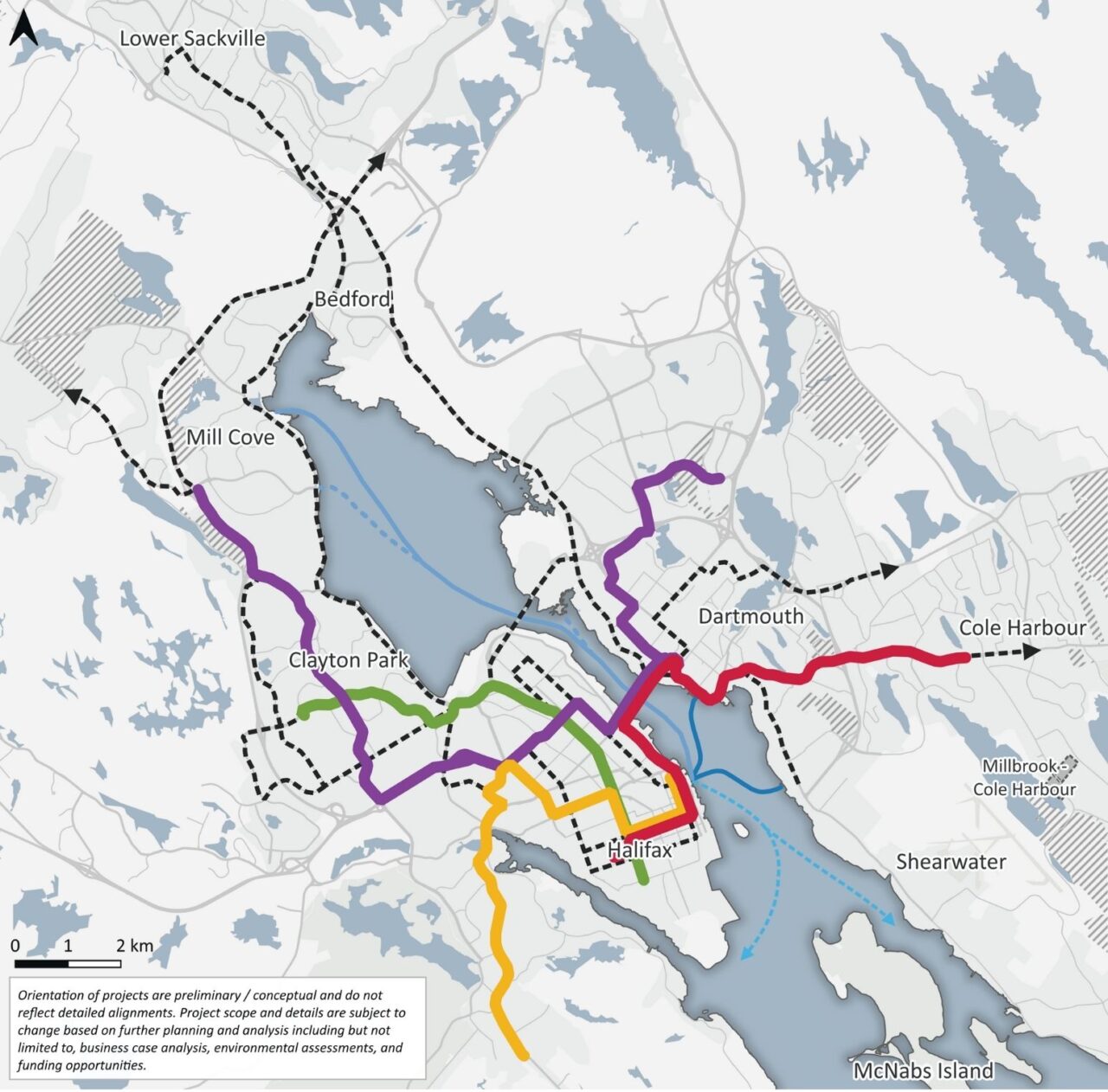
Based on Halifax Transit’s Rapid Transit strategy, the bus rapid transit (BRT) and ferry network are recommended in the Regional Transportation Plan. BRT is a specialized form of frequent bus service that uses dedicated lanes and makes fewer stops to increase the service’s speed and convenience. Expanded ferry service uses the harbour to transport people from key locations to downtown Halifax. Coupled with a proposed inter-municipal bus service, ongoing commitments to community transportation, and active transportation projects to support first mile / last mile travel, these services form an integrated transit network for the region. BRT also helps to establish a foundation of ridership, land use, and right-of-way preservation for future investments like Light Rail Transit (LRT).
Benefits
- Move more people within urban corridors more efficiently and increase network capacity.
- Reduces transportation costs.
- Improves overall mobility for Nova Scotians, supporting increases in economic productivity in urban regions.
- Removes transportation barriers.
- Connects major housing growth and provincially approved Special Planning Areas to key locations where people work, go to school, and access every day services.
STATUS
The Province is assisting Halifax Regional Municipality (HRM) in acquiring land along the Robie Street corridor (a key corridor for the BRT network), conducting a passenger rail feasibility study for the Halifax region, and preparing to initiate several corridor reviews. These actions support future implementation of a Bus Rapid Transit network.
On March 4, 2024, the Province announced $65 million in funding toward the Mill Cove Ferry project, the first component of the rapid transit strategy to move forward.
FROM THE REGIONAL TRANSPORTATION PLAN
Action 1.3.2: Implement Rapid Transit service and the associated infrastructure it requires.
Fast, frequent, and reliable rapid transit service (Bus Rapid Transit [BRT] and additional high-speed ferry service) in densely populated areas is needed to support the province’s growth and development, move more people more efficiently, reduce the cost of travel, increase access to jobs / expand the labour market, and support broader goals to reduce GHG emissions. Additional ferry service includes Mill Cove (funded) and Shannon Park, and longer-term potential routes including Larry Uteck, Purcells Cove, and Eastern Passage. Opportunities to increase ferry crossing frequency on existing routes, to provide maximum service efficiency will also be explored.