Benefits
- Allows for dynamic management of the transportation system 24/7, 365.
- Improved travel time, reliability, and reduced congestion.
- Assists in system recovery from disruptions like collisions, poor weather, and special events.
- Provides faster incident detection and response.
- Improved communication giving users real-time information to make informed travel decisions.
Status
Link Nova Scotia and Halifax Regional Municipality are introducing adaptive traffic signals, with Link providing funding, and HRM leading the installation, implementation, and monitoring of the upgrades at eight intersections along the Macdonald Bridge corridor.
Adaptive traffic signals use camera sensors to make standard traffic signals smarter, detecting real-time traffic volumes and automatically adjusting the timing of the light. This means no more waiting at a red light while there is no traffic in opposing directions.
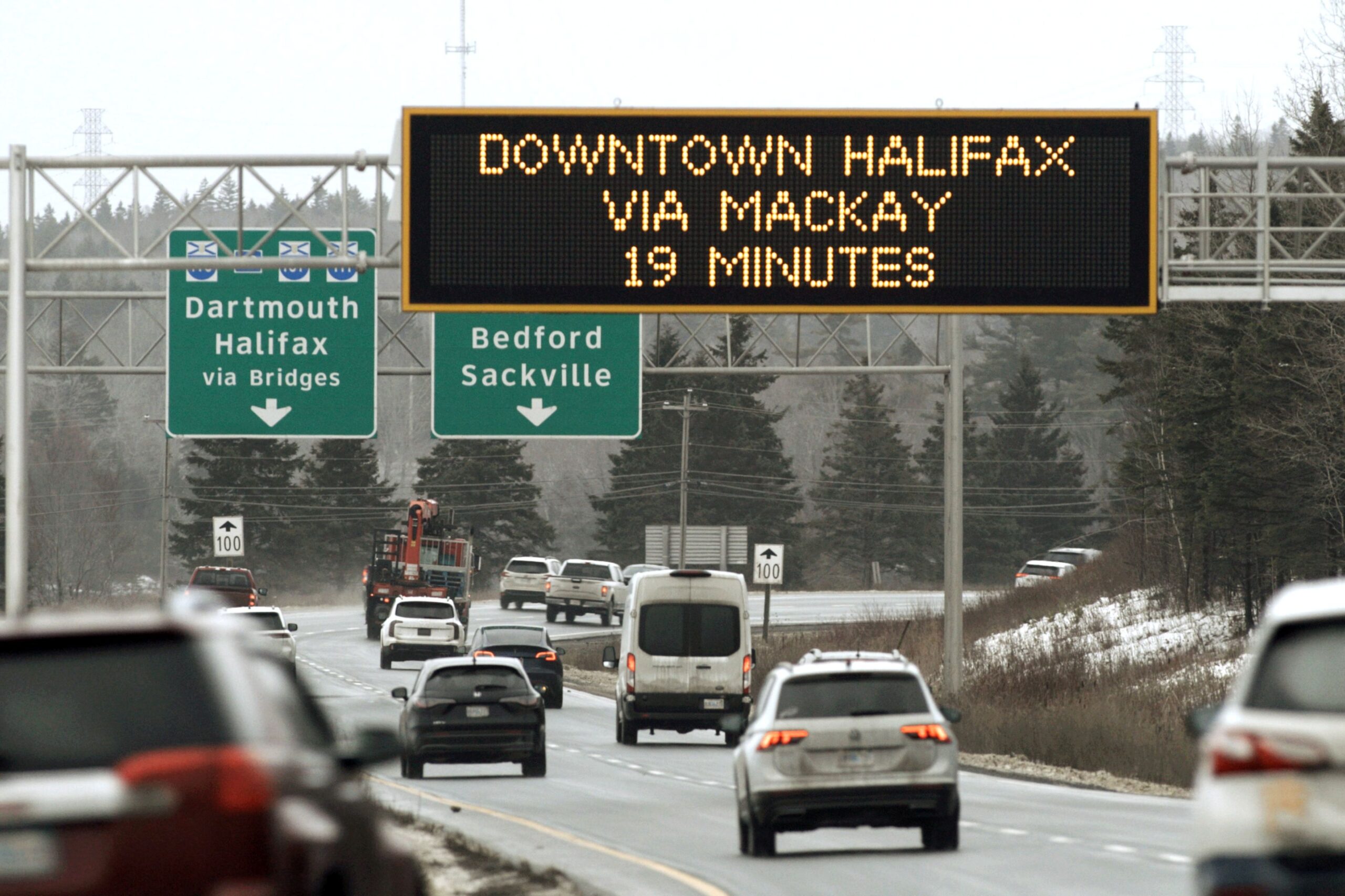
There are now 11 variable message signs in key corridors around HRM providing real-time messages using information from Bluetooth and Wi-fi sensors that calculate average travel times between key points.
The variable message signs are active on major approaches to both the A. Murray MacKay and Angus L. Macdonald bridges, providing up-to-the-minute information on travel times. This helps you make more informed travel decisions, allows you to choose the most efficient route and reduces uncertainty during peak periods.
These technologies are examples of Intelligent Transportation System (ITS). They build a strong foundation for the establishment of a future Regional Transportation Management Centre.
Action 1.1.1: Create a Regional Transportation Management Centre (RTMC), with corresponding investments in intelligent transportation systems (ITS).
RTMC and ITS investments will improve the safety, efficiency, and reliability of the system and enhance the capacity to move more people and goods. A RTMC is a facility that monitors and can manage the road network in real time using elements such as live video feeds from across the network, remote signal timing changes, variable message signs, and variable speed limits, among other ITS applications. These investments will allow for dynamic management of the system, assist in the recovery from disruptions such as collisions, poor weather, and special events, and provide users with real-time information to make informed travel decisions.
Goal 1 | Strengthen Regional Connections
Strategy 1.1 | Enhance the safety and efficiency of the regional transportation system
Challenges Addressed